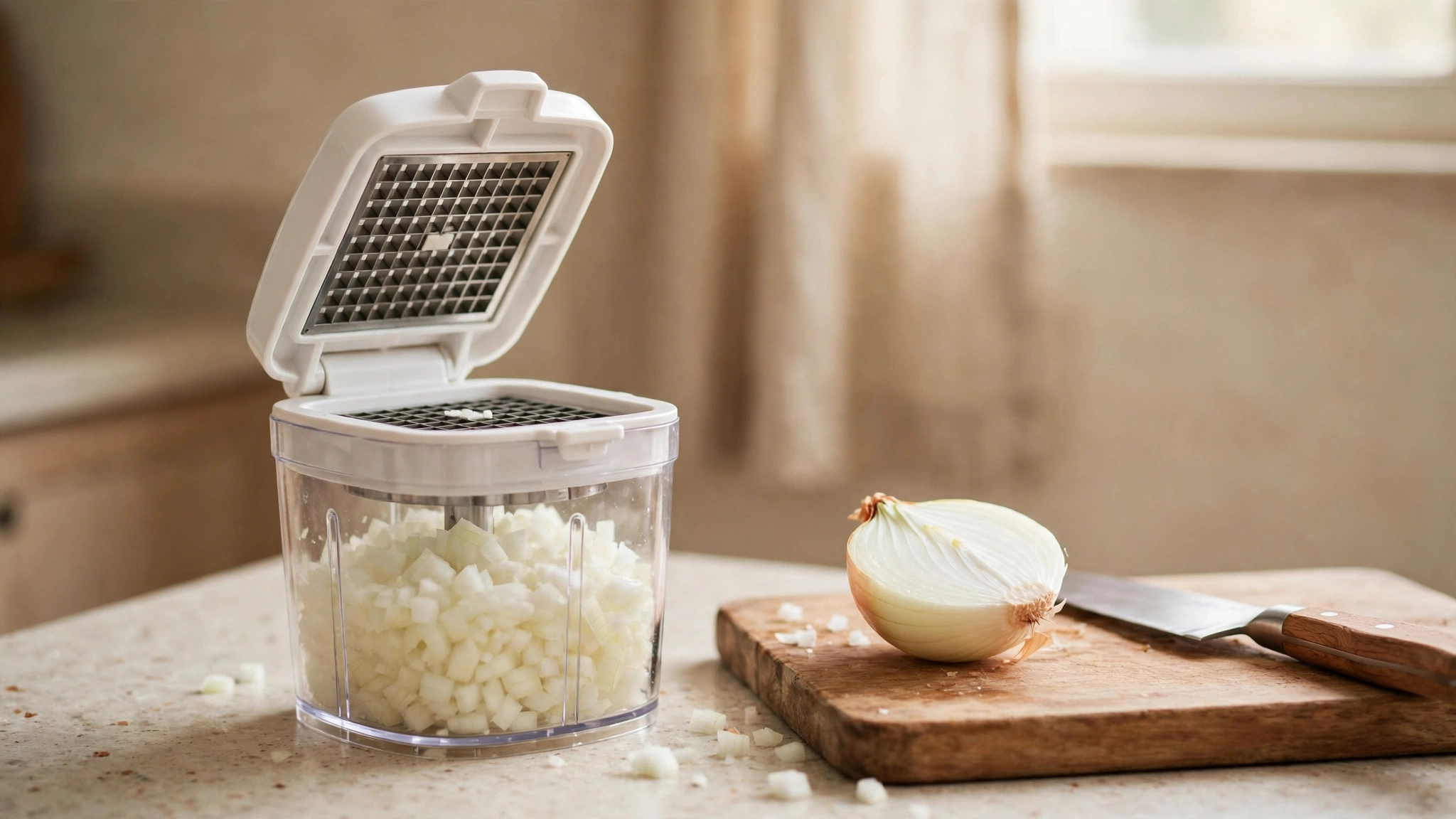
Fullstar Vegetable Chopper Review: What the 1-Star Reviews Tell You (2026)
Last updated: October 2026
Disclosure: This guide contains affiliate links. If you buy through them, we may earn a commission at no extra cost to you. How we judge →
The Fullstar Vegetable Chopper is one of the most-reviewed kitchen gadgets on Amazon — a 4.8-star average across more than 100,000 ratings. Numbers like that usually end the conversation. They shouldn’t, because averages hide patterns, and patterns are where buying decisions live.
So we did what we do with every product here: we read the unhappy reviews on purpose. Not to trash a popular product — the praise is mostly real — but to find the complaints that repeat, figure out who they hit hardest, and tell you whether there’s a workaround or a dealbreaker. This is the review the star average can’t give you.
Drawer Verdict up front: On Probation — 76/100. A genuine time-saver with three recurring costs its fans don’t mention: cleaning minutes, a hinge with a lifespan, and blades you cannot sharpen. Details below. (It also appears in our gadgets under $30 guide, where its shoebox-sized storage footprint put it on probation there too.)
The complaint taxonomy
| Complaint | How often it shows up | Who it hits hardest | Workaround or dealbreaker? |
|---|---|---|---|
| Food trapped in blade grids; slow cleaning | Most common | Fine-dice users; sticky veg | Workaround exists, costs minutes |
| Plastic hinge breaks (often ~3-4 months in) | Common | Heavy, frequent users | Dealbreaker risk — no workaround |
| Blades dull and can’t be sharpened | Common over time | Long-term owners | Manageable: replacement blades exist |
| Needs real force on dense vegetables | Common | Low hand strength, arthritis | Pre-cutting helps; may be a dealbreaker |
| Cuts during cleaning | Recurring | Everyone, once | Brush + top-rack discipline |
| Soft produce gets squished | Recurring | Tomato/ripe fruit users | Use the knife for soft things |
| Container fills fast on big batches | Occasional | Family-size meal preppers | Empty mid-batch |
1. Cleaning: the complaint that eats the time you saved
This is the most common negative theme by a wide margin, and it’s specific: diced food wedges into the blade grid — the fine dicer worst of all — and the pusher lid’s teeth trap their share too. Owners describe spending 5-10 minutes cleaning all the parts, and several note the included brush is a poor match for the job: the blades shred its bristles. Dishwasher claims need an asterisk too — multiple reviewers say the dishwasher alone doesn’t clear the grids unless you pre-rinse and pick first.
The workaround is real but it reprices the product: rinse and brush immediately after use (dried onion in a grid is a different problem from fresh onion), and budget about 3 extra minutes. Our Drawer Score math already counts this: the Fullstar saves serious dicing time and gives some of it back at the sink. Net: still positive for weekly dicers, roughly zero for monthly ones.
2. The hinge: the one with a lifespan
The most serious structural complaint is the plastic hinge on the press lid. Reports of hinges cracking or snapping cluster around the 3-4 month mark among people who use the chopper hard and often — exactly the people who get the most value from it. There’s no user workaround for a hinge; technique (pressing straight down, not at an angle, and pre-cutting dense vegetables into smaller pieces) reduces the strain, but the part is what it is.
This is the main reason the Fullstar sits at On Probation rather than Earns the Drawer. A product can be excellent for a year and still be a questionable drawer decision if year two requires a rebuy. The honest mitigation: Fullstar sells replacement parts, including blades, which is more than most gadgets at this price offer.
3. Blades: extremely sharp, then permanently less so
Out of the box, even the negative reviews concede the blades are wickedly sharp — that’s how the dicing magic happens. The catch, stated plainly in expert reviews and owner reports alike: the grid design cannot be sharpened. Over months of use the edges dull, pressing takes more force (see complaint 4), and soft produce starts to crush instead of cut. Replacement blade inserts exist and are the intended answer. Treat blades as a consumable with a long life, not a permanent edge, and the economics still work — but go in knowing it.
4. The press takes strength
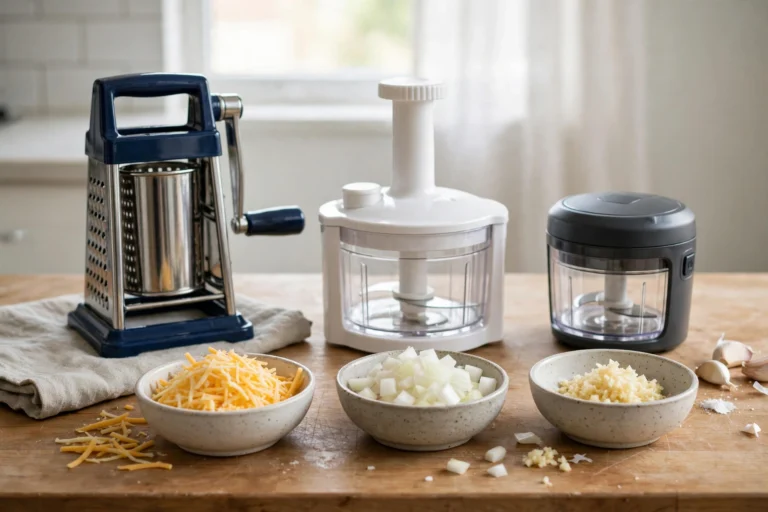
Dense vegetables — carrots, potatoes, butternut — need a firm two-handed press, and reviewers with arthritis or weaker hands flag this repeatedly. Pre-cutting dense veg into smaller slabs reduces the force a lot, and the soft-grip handle and non-slip base genuinely help (those get praised even in critical reviews). But if pressing down hard is difficult for you, no technique fully fixes it: this is the one complaint we’d call a true dealbreaker for a specific group of buyers. A rotary grater (handle does the leverage) is the kinder tool — different gadget, same prep goals.
5. Smaller recurring complaints, quickly
- Cuts happen at the sink, not the counter. The blades are exposed during cleaning; use the brush, wash pieces separately, and never reach into a soapy sink blind.
- Soft produce squishes. Ripe tomatoes and avocado crush rather than dice. That’s physics for every grid dicer, not a Fullstar flaw — the knife keeps that job.
- The 1.2L container fills fast. Fine for one or two people; batch preppers for a family will empty it mid-job.
- Knock-offs exist. Multiple sources warn about look-alike copies with worse plastic. Buy from the brand’s own listing — this is exactly where a too-good price turns into the hinge story above, faster.
What the five-star reviews get right
Fairness section, because the average isn’t lying either. The dicing is fast and strikingly uniform — onions in particular, with the bonus that the closed container means fewer onion tears. For salsa, salads, soups and meal-prep bases, owners consistently describe prep shrinking from fifteen minutes to two or three. Blade swaps take seconds, the base doesn’t skate around the counter, and for its first months of life the tool does exactly what the videos promise. If your cooking life is weekly batches of diced vegetables, the complaints above are a price, not a veto.
Who should buy it, who should skip it
Buy it if: you dice onions, peppers or zucchini at least weekly; your hands are strong; you’ll rinse it immediately; and you accept blades-and-maybe-hinge as the product’s lifespan costs.
Skip it if: you have arthritis or weak grip; you dice monthly (a knife wins on total time — see our under-$30 guide for the math); or you mostly prep soft produce.
FAQ
Is the Fullstar actually dishwasher safe? Officially yes, top rack recommended (high heat can damage the plastic). Owner experience says: pre-rinse and clear the grids first, or you’ll be hand-washing it after the dishwasher anyway.
How long do the blades last? It depends on volume and what you dice, but plan on the edge declining noticeably within the first year of heavy use. Replacement inserts are sold separately and swap in seconds.
Fullstar or a rotary cheese grater for meal prep? Different strengths: the Fullstar dices, the rotary grater shreds and slices with less pressing force and easier cleaning. Our three-way comparison (grater vs. chopper vs. electric) is in the works; the short answer is dicing → Fullstar, shredding → rotary.
The Drawer Verdict: On Probation — 76/100 (Problem 22/25 · Space 13/25 · Time 16/20 · Build 11/15 · Value 14/15). A real time-saver whose costs are written in its one-star reviews: cleaning minutes, a hinge lifespan, unsharpenable blades. Buy it with open eyes and it earns its shelf. Buy it as a miracle and it won’t.
Disagree with a verdict? Tell us what earned your drawer — hello@earnthedrawer.com.
Researched & written by the Earn The Drawer editors. How we research →
一条评论