Best Oil Sprayers for Air Fryers (2026): Which Ones Actually Mist?
Last updated: October 2026
Disclosure: This guide contains affiliate links. If you buy through them, we may earn a commission at no extra cost to you. How we judge →
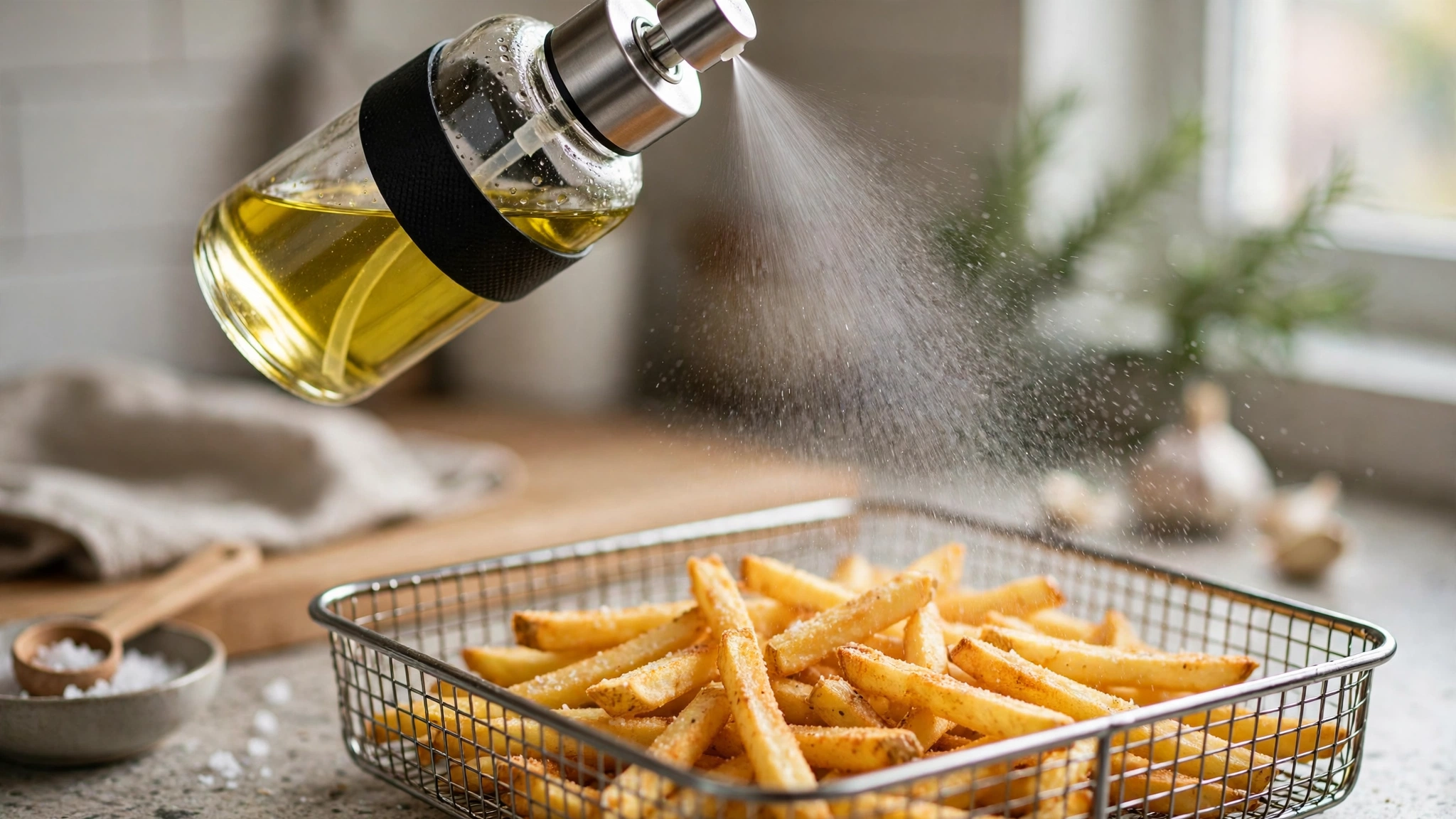
Open any oil sprayer listing and you’ll see the same photo: a perfect fan of golden mist. Use the actual product and half of them fire a single sad stream — a laser of olive oil that soaks one french fry and leaves the rest dry. For air frying, where a thin, even coat is the entire difference between crisp and leathery, the pattern is the product.
This guide is built around that one test — mist vs. stream — plus the other two things owners learn the hard way: clogging, and what happens with thick oils. Our top pick scored 88/100 in our main air fryer accessories guide; here it gets its full working-out. (Why spray at all? Aerosol cooking sprays carry additives and propellants widely reported to build up a stubborn residue on nonstick baskets — a refillable sprayer is your own oil, nothing else.)
The three tests that matter
- Pattern. A real mister produces a wide, even fan or fine cloud. A fake one produces a stream or spit-droplets. Pattern depends on nozzle design and pumping pressure — and it’s the first thing bargain sprayers fake in photos.
- Clogging. Oil + air + time = gunk at the nozzle. Sprayers differ hugely in whether a hot-water flush revives them or they’re landfill by month three. Fine nozzles mist best and clog fastest; the good designs let you rinse the nozzle properly.
- Thick oils. Olive and avocado oil are the point of owning one of these. Any sprayer can mist water-thin oil; the test is extra-virgin olive oil at room temperature without sputtering.
The picks
TrendPlain 16oz refillable sprayer — 88/100 — Earns the Drawer ✓
The one that does the photo’s promise: a genuine wide fan from a well-sized nozzle, and a 16oz glass body that means refilling is a monthly event, not a weekly chore. It handles olive oil at room temperature without the sputter-clog cycle that kills cheaper misters, and the glass doesn’t hold last month’s oil smell the way plastic does.
The drawback, honestly: it’s a countertop resident, not a drawer item — tall bottle, wants a home by the fryer — and glass plus tile floors is a risk you accept once. The spray is a fan, not a true aerosol cloud; two passes beat one.
Skip it if: you want a tiny bottle for occasional use — the generic below is smaller, and cheaper to be wrong about.
2-in-1 pour & spray bottles — 76/100 — On Probation
Squeeze for spray, tilt for pour. The concept is made for small kitchens — one bottle, two jobs — and the pour spout genuinely earns its keep for dressing and pan work.
Why only probation: the spray half is usually the weaker half — narrower pattern, more sputter with thick oil — and the pour spout drips down the bottle after use, so the bottle lives on a small tray or wears an oil ring. Jack of both trades; the sprayer above out-mists it.
Skip it if: spraying is 90% of your oil use. Buy the specialist.
Pump-pressurized misters — 71/100 — On Probation
You pump the cap to build pressure, then spray a fine, propellant-free mist — the closest texture to canned spray, and the best pattern in this guide when freshly pumped.
Why only probation: the pressure fades mid-spray (so the pattern degrades exactly while you’re using it), the pumping ritual gets old by week two, and seals are the failure point in owner reports — a mister that won’t pressurize is a bottle with a hat.
Skip it if: you’ll resent the pump. Honestly assess this; most people do.
Bargain trigger sprayers — 39/100 — Doesn’t Earn It ✗
The $5-8 clear-plastic triggers crowding the search results. Stream, not mist; sputter with olive oil; nozzles that clog beyond the help of hot water; and thin plastic that takes on old-oil smell permanently. They test your patience, not your oil. The TrendPlain costs a few dollars more and is a different species.
Keep yours alive (the 60-second maintenance)
- Hot-water flush monthly: empty, warm water + a drop of dish soap, spray it through, rinse, air-dry the nozzle. This alone prevents most clog funerals.
- Don’t store oil in it forever: oil oxidizes. Fill halfway if you’re a light user; refill fresh rather than topping up old oil indefinitely.
- Thick oil, warm bottle: if your kitchen is cold and the olive oil sputters, 10 seconds of warm water on the bottle fixes viscosity more honestly than shaking ever will.
FAQ
How much oil does a sprayer actually use vs. pouring? Dramatically less — a fine fan coats a basket of fries with roughly a teaspoon where pouring uses a tablespoon before it spreads. That gap is the air-fryer point: crisp needs a film, not a puddle.
Can I put vinegar or soy sauce in one? In glass models, yes for occasional use (rinse after); in cheap plastic, the seals and smell retention argue no. Dedicated small sprayers for dressings exist if that’s your habit.
Sprayer vs. silicone brush for oil? Brush wins for marinades and thick sauces; sprayer wins for dry goods (fries, wings, vegetables) where an even film crisps best. Many small kitchens end up with both — the brush stores flat, so the drawer forgives it.
The Drawer Verdict (overall): Buy for the pattern, maintain for the clog. TrendPlain 88 — the rare sprayer that mists like its photo.
Disagree with a verdict? Tell us what earned your drawer — hello@earnthedrawer.com.
Researched & written by the Earn The Drawer editors. How we research →