Do Fridge Produce Containers Actually Keep Fruit Fresh Longer? (2026)
Last updated: October 2026
Disclosure: This guide contains affiliate links. If you buy through them, we may earn a commission at no extra cost to you. How we judge →
The promise is always the same photo: jewel-bright strawberries, day nine, looking freshly picked. The reality in most fridges is day-four fuzz. So do produce containers actually work, or is the fresh-keeping mostly theater?
Short answer: they work — a bit, for specific produce, for specific reasons. The long answer is this page: what actually rots your fruit, the three mechanisms a container can genuinely affect, and a verdict by produce type, including the free hack that captures most of the benefit. Research-based as always: we synthesize food-science guidance and long-run owner reports rather than staging our own lab theater.
Why produce dies in your fridge (the 30-second science)
- Moisture is the main killer. Berries and greens rot where water sits on them. A puddle under a clamshell of raspberries is a mold incubator.
- One bad berry really does spoil the bunch. Mold spreads by contact; a single fuzzy berry seeds its neighbors.
- Ethylene gas from ripening fruit (bananas, apples, avocados) accelerates its neighbors. Separation matters as much as storage.
- Cold, dry fridge air wilts greens and herbs from the other direction — they die of thirst, not rot.
A container can only fight #1 (drainage + airflow) and partly #3 (separation). Anything claiming more is marketing.
The verdict by produce type
| Produce | Stock packaging | Paper-towel hack | Dedicated container | Worth buying? |
|---|---|---|---|---|
| Berries | 3-5 days | +1-2 days | +2-4 days | Yes — the strongest case |
| Leafy greens | 3-4 days | +2-3 days | +2-3 days | Hack ties; container tidier |
| Herbs | 3-5 days | +3-4 days (in a jar of water) | +3-5 days | Jar beats most products |
| Cut fruit / half onions | 2-3 days | n/a | +1-2 days | Only if you meal-prep cut fruit |
| Whole fruit (apples, citrus) | 1-3 weeks loose | n/a | No real gain | No — skip entirely |
The picks, scored
Dedicated berry/produce container with vented, raised base — 80/100 — Earns the Drawer ✓
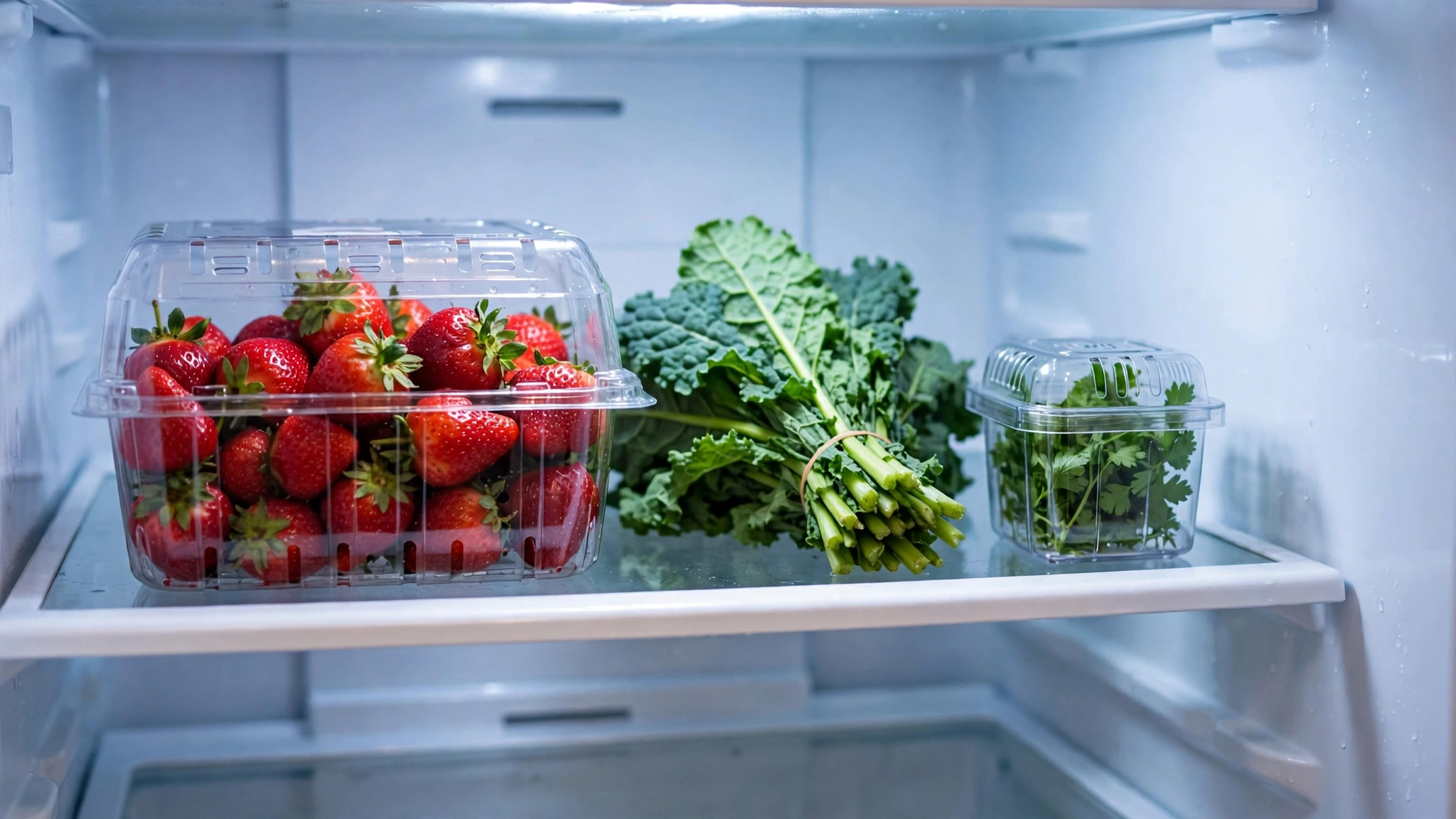
What works: a raised inner base keeps berries out of their own juice, and adjustable vents manage humidity — drier for berries, more humid for greens. Owner reports cluster consistently around “berries lasted about twice as long,” which matches the mechanism: it’s the drainage doing the work, not any magic filter. The replaceable carbon filters on fancier models are the weakest-evidence part of the pitch — the base and vents earn this score; the filter is garnish.
The drawback, honestly: they are bulky, oddly shaped for small fridges, and one container serves one produce type at one vent setting. Two or three of them and your fridge shelf is a Tetris problem.
Buy it if: berries are a weekly purchase that currently dies on you. Skip it if: your “produce” is mostly apples and citrus — the fridge already handles those.
The paper-towel hack — free, and embarrassingly effective
Line the original clamshell (or any box) with a paper towel, berries in a single-ish layer, another towel on top, swap the towel when it’s damp. It attacks the same #1 killer — surface moisture — and in greens it flat-out ties the dedicated products. It earns no affiliate link and no Drawer Score, because you already own it. We are obliged by our own rules to tell you: for greens and herbs, start here; buy hardware only if the towels annoy you.
Herb keeper / jar method — 77/100
Herbs are the second real use case: stems in water, loose cover, fridge door. A glass of water and a produce bag does this free; the dedicated keeper is just that, tidied and spill-resistant — worth it if your fridge door is crowded and the jar keeps toppling.
Skip it if: you buy herbs in small bunches and use them within days.
“Produce saver” bags and liners — 58/100 — On Probation
Ethylene-absorbing bags and fridge liners: the mechanism is real for ethylene-sensitive produce stored with ethylene producers, but in a normal mixed fridge the effect owners report is small and inconsistent, and the bags are a recurring purchase. A forever cost for a maybe. Separation — bananas out of the fruit drawer — is free and works better.
The buying order for a small fridge
- Towels first (free): berries and greens tonight.
- One vented berry container if berries keep dying — one, sized to your actual berry habit.
- Herb keeper only if the jar-in-door situation has already spilled on you twice.
That’s the whole system. Fridge space is drawer space: everything beyond this list is produce-container clutter wearing a lab coat.
FAQ
Should I wash berries before storing them? No — wash just before eating. Pre-washing adds the surface moisture that rots them; the towel/container strategy assumes dry berries going in.
Do the containers help with the “one bad berry” problem? Only if you sort: 30 seconds picking out the soft or damaged berries before storage does more than any container feature. Containers slow spread; sorting prevents it.
What about vacuum-seal containers? Overkill for produce — vacuum can bruise delicate fruit, and the systems cost real drawer space. They’re a cheese-and-coffee tool, not a berry tool.
The Drawer Verdict (overall): Containers work where moisture is the enemy — berries first, herbs second — and the free towel captures most of it. Buy one good vented box, not a system.
Disagree with a verdict? Tell us what earned your drawer — hello@earnthedrawer.com.
Researched & written by the Earn The Drawer editors. How we research →
(Organization cluster sibling: our under-sink organizers guide applies the same measure-first logic below the counter.)